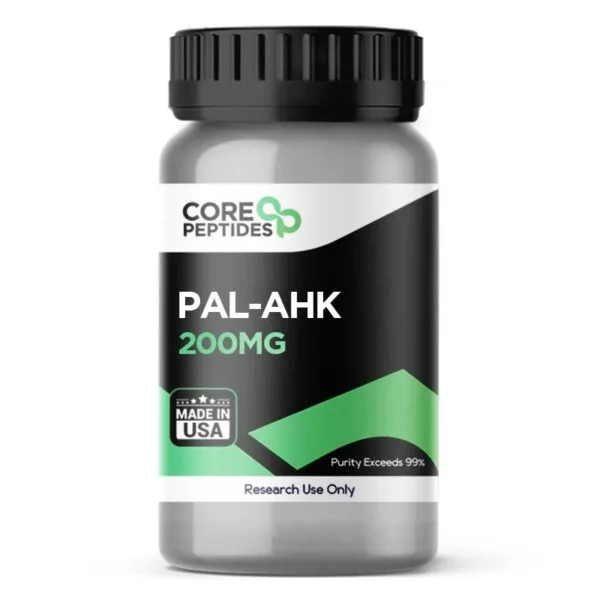
Pal-AHK (200mg)
$175.00
Pal-AHK is a synthetic peptide composed of amino acids alanine, histidine, and lysine, with the addition of a palmitoyl group. Studies have only investigated the action of non-palmitoylated AHK. Still, Pal-AHK likely exerts similar impacts since adding palmitoyl to the AHK molecule is not likely to significantly alter the compound’s mechanism of action. Palmitoylation is typically considered only to enhance a compound’s capacity for cell penetration, which may make it more capable of exerting action. Research suggests one key potential action of AHK and Pal-AHK may be to stimulate the production of collagen and elastin, two proteins considered essential within the extracellular matrix (ECM) of skin cells.
Size: 200mg
Contents: Pal-AHK
Form: Lyophilized powder
Purity: >99%
SKU: P-Pal-AHK
FREE Shipping on $200+ orders
Description
Pal-AHK
Pal-AHK is a synthetic peptide composed of amino acids alanine, histidine, and lysine, with the addition of a palmitoyl group. Studies have only investigated the action of non-palmitoylated AHK. Still, Pal-AHK likely exerts similar impacts since adding palmitoyl to the AHK molecule is not likely to significantly alter the compound’s mechanism of action. Palmitoylation is typically considered only to enhance a compound’s capacity for cell penetration, which may make it more capable of exerting action. Research suggests one key potential action of AHK and Pal-AHK may be to stimulate the production of collagen and elastin, two proteins considered essential within the extracellular matrix (ECM) of skin cells.
Collagen is a major structural protein that lends strength and durability to the skin barrier, while elastin is considered responsible for supporting its elasticity. In addition to its potential for collagen and elastin production, Pal-AHK may also exhibit anti-oxidative action. Oxidative stress is considered to cause quantitative damage to cells and tissues. Antioxidants may help to neutralize free radicals, the main cause of oxidative stress. By scavenging these free radicals, antioxidants may prevent or reduce damage and environmental exposure biomarkers, including limiting wrinkle depth and length along the skin barrier. Studies have suggested that Pal-AHK may also have the potential to induce hair follicle growth due to anti-oxidative action and interaction with various molecules and growth factors. Examples include transforming growth factor-β1 (TGF-β1), Bcl-2/Bax ratio, vascular endothelial growth factor (VEGF), caspase-3, poly-(ADP-ribose) polymerase (PARP), and others.
Chemical Makeup
Molecular formula: C31H56N6O5
Molecular weight: 592.8 g/mol
Other Known Titles: Palmitoyl AHK
Research and Clinical Studies
Pal-AHK Peptide and Antioxidation
Tripeptide AHK was first developed from albumin hydrolysate.(2)(3) The addition of palmitoyl may improve the skin cell permeability of the peptide. Scientists report that the tripeptide may potentially reduce the expression of TGF-β1.(3) TGF-β1 is a molecule that supports the formation of new blood vessels and is considered to stimulate the production of extracellular matrix components, regulating the inflammatory response. Excessive activity may lead to chronic inflammation and tissue damage in certain contexts. Thus, reducing TGF-β1 levels may help to mitigate this action. The potential antioxidant action of Pal-AHK may be attributable to its unique amino acid composition.(4) Researchers suggest that the peptide “provides an increased dermal cell multiplication and viability to help to the production of collagen.” Researchers posit that this supposed action of AHK may directly impact the ECM through cell and protein production.
Pal-AHK Peptide and Hair
No research exists on Pal-AHK’s impact on hair/fur growth. However, derivatives of AHK suggest that similarly structured compounds may promote the growth of hair follicles via the proliferation of dermal papilla cells (DPCs) and blocking their apoptosis.(5) The researchers suggested that AHK-analogs “stimulated the elongation of […] hair follicles […] and the proliferation of DPCs.”
Pal-AHK may achieve similar potential by elevating the Bcl-2/Bax ratio and reducing negative growth factors such as cleaved caspase-3 and PARP. The Bcl-2/Bax ratio is considered important in regulating apoptosis (programmed cell death). Bcl-2 is classified an anti-apoptotic protein that may inhibit cell death, while Bax is a pro-apoptotic protein that may promote cell death. Thus, a higher Bcl-2/Bax ratio would indicate a predominance of Bcl-2, which may inhibit apoptosis and promote cell survival.
The theoretical potential of Pal-AHK to promote hair growth by preventing dermal papilla cell apoptosis is a hypothesis founded on research that suggests the peptide’s involvement in reducing the levels of the cleaved forms of caspase-3 and PARP. Caspase-3 is considered to be a primary player in the process of apoptosis and is believed to contribute to the loss of dermal papilla cells when present in its cleaved, active form. When cleaved by caspase-3, PARP may facilitate cellular disassembly, a hallmark of apoptosis. Thus, inhibiting caspase-3 activation and reducing the cleaved forms of PARP as part of the same apoptotic pathway may plausibly contribute to decreased cell death in the hair follicles, potentially fostering an environment more conducive to hair retention and growth. Research also suggests this action possibly lowered apoptosis levels in these cell types under experimental observation.(6) Furthermore, studies report that Pal-AHK may increase the expression of vascular endothelial growth factor (VEGF), which, combined with reducing TGF-β1, may also help reduce shedding and promote hair growth.(7)
VEGF is a protein that is considered to play an important role in angiogenesis. It is also thought to promote the growth of blood vessels around hair follicles, which may help supply nutrients and oxygen to the hair follicle and support growth.
Pal-AHK Peptide and Skin Cells
Although blocking TGF-β1 tends to have antiproliferative action, researchers suggest that Pal-AHK may stimulate the proliferation of skin cells and collagen synthesis via other pathways. The specific potential of Pal-AHK on the skin is yet to be investigated. Still, researchers have suggested that the main molecule, AHK, may yield positive action in preliminary laboratory research. One such potential is the viability and proliferation of dermal fibroblasts, key cells responsible for producing the essential proteins of the ECM, including collagen.
Cell culture studies using normal dermal fibroblasts found that AHK appeared to increase cell growth and viability while potentially promoting the production of collagen type I.(8) This was determined by isolating the amount of collagen type I produced by fibroblasts in cell culture after incubation with various amounts of AHK. Results suggested that AHK may increase collagen type I production, with studies reporting a 300% increase compared to a control group. The findings suggest that AHK may potentially renew the extracellular matrix.
Reviews (0)
Be the first to review “Pal-AHK (200mg)” Cancel reply
Shipping and Delivery
MAECENAS IACULIS
Vestibulum curae torquent diam diam commodo parturient penatibus nunc dui adipiscing convallis bulum parturient suspendisse parturient a.Parturient in parturient scelerisque nibh lectus quam a natoque adipiscing a vestibulum hendrerit et pharetra fames nunc natoque dui.
ADIPISCING CONVALLIS BULUM
- Vestibulum penatibus nunc dui adipiscing convallis bulum parturient suspendisse.
- Abitur parturient praesent lectus quam a natoque adipiscing a vestibulum hendre.
- Diam parturient dictumst parturient scelerisque nibh lectus.
Scelerisque adipiscing bibendum sem vestibulum et in a a a purus lectus faucibus lobortis tincidunt purus lectus nisl class eros.Condimentum a et ullamcorper dictumst mus et tristique elementum nam inceptos hac parturient scelerisque vestibulum amet elit ut volutpat.
Related products
ACE-031 Peptide (1mg)
$170.00
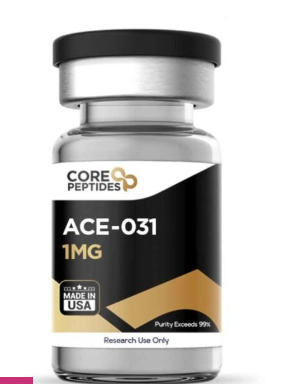
ACE-031 1 mg is a research-grade lyophilized protein peptide engineered for high-purity laboratory applications. Each vial contains 1 mg of HPLC-verified ACE-031, third-party tested to guarantee over 99% purity and manufactured in the USA under strict standards. Formulated specifically for research investigating myostatin signal neutralization, ActRIIB decoy receptor binding, and muscle growth regulation pathways, this product is strictly intended for research use only.
ARA-290 Peptide (16mg)
$92.00
ARA-290 16 mg provides a high-purity, laboratory-verified lyophilized peptide manufactured under strict quality control standards in the USA. Formulated with 16 mg of pure ARA-290 (Cibinetide; Pyroglu-Glu-Gln-Glu-Arg-Glu-Arg-Ala-Glu-Ala-Lys-Glu)—a 11-amino-acid synthetic peptide derived from the erythropoietin (EPO) structure—this compound selectively targets the Innate Repair Receptor (IRR) without stimulating erythropoiesis. It is widely utilized in neurology, immunology, and tissue regeneration research investigating neuropathic pain attenuation, small nerve fiber regeneration, and inflammatory cytokine suppression.
Key Specifications
Active Compound: ARA-290 (Cibinetide / Pyroglutamate Helix B Surface Peptide)
Chemical Formula: \text{C}_{51}\text{H}_{84}\text{N}_{16}\text{O}_{21}
Concentration: 16 mg per vial
Purity Standard: Exceeds 99% (Third-Party HPLC Verified)
Formulation: Sterile Lyophilized Powder
Origin: Manufactured in USA
Classification: Research Use Only
Primary Research Applications
Selective Innate Repair Receptor (IRR) Activation: ARA-290 selectively binds the erythropoietin receptor / \beta-common receptor (\text{EPOR/}\beta\text{cR}) heterodimer to initiate anti-inflammatory and tissue-protective signaling without increasing red blood cell count or hematocrit levels.
Small Fiber Neuropathy & Peripheral Nerve Repair: Extensively studied in neuropathic disease models for its ability to promote small nerve fiber density restoration, repair damaged peripheral axons, and relieve neuropathic pain signaling.
Anti-Inflammatory & Ischemic Protection: Investigated for its inhibitory effects on pro-inflammatory cytokine cascades (\text{TNF-}\alpha, \text{IL-6}) and its protective role against ischemia-reperfusion injury in cardiovascular and metabolic tissue models.
DSIP (5mg)
$41.00
DSIP 5 mg provides a high-purity, laboratory-verified lyophilized peptide manufactured under strict quality control standards in the USA. Formulated with 5 mg of pure Delta Sleep-Inducing Peptide (Trp-Ala-Gly-Gly-Asp-Ala-Ser-Gly-Glu)—a naturally occurring nonapeptide found in the brain and systemic circulation—this compound is widely utilized in neurobiology, endocrinology, and sleep architecture research investigating slow-wave sleep induction, stress response adaptation, and neuroendocrine regulation.
Key Specifications
Active Compound: Delta Sleep-Inducing Peptide (DSIP)
Chemical Formula: \text{C}_{35}\text{H}_{48}\text{N}_{10}\text{O}_{15}
Concentration: 5 mg per vial
Purity Standard: Exceeds 99% (Third-Party HPLC Verified)
Formulation: Sterile Lyophilized Powder
Origin: Manufactured in USA
Classification: Research Use Only
Primary Research Applications
Sleep Architecture & Delta Wave Induction: DSIP is extensively studied for its capacity to induce slow-wave (delta) EEG activity, providing valuable insights into non-REM sleep regulation and circadian rhythm dynamics.
Stress Response & ACTH Modulation: Applied in neuroendocrine models to evaluate its inhibitory action on stress-induced corticotropin (ACTH) release and adrenal axis stabilization.
Analgesic & Antioxidant Activity: Investigated for its potential neuromodulatory mechanisms in modulating central pain perception and protecting cellular structures against oxidative damage.
Epithalon (25mg)
$90.00
Epithalon 25 mg is a research-grade lyophilized tetrapeptide engineered for high-purity laboratory applications. Each vial contains 25 mg of HPLC-verified Epithalon, third-party tested to guarantee over 99% purity and manufactured in the USA under strict standards. Formulated specifically for research investigating telomerase enzyme induction, pineal function restoration, and cellular longevity pathways, this product is strictly intended for research use only.
Humanin (10mg)
$145.00
Humanin 10 mg provides a high-purity, laboratory-verified lyophilized peptide manufactured under strict quality control standards in the USA. Formulated with 10 mg of pure Humanin—a naturally occurring 24-amino-acid micropeptide encoded within the mitochondrial genome (16S rRNA)—this compound is widely utilized in cellular biology, metabolic health, and neurodegenerative disease research investigating cytoprotective mechanisms, oxidative stress regulation, and insulin sensitivity pathways.
Key Specifications
Active Compound: Humanin (HN)
Chemical Formula: \text{C}_{119}\text{H}_{204}\text{N}_{34}\text{O}_{35}\text{S}_{2}
Concentration: 10 mg per vial
Purity Standard: Exceeds 99% (Third-Party HPLC Verified)
Formulation: Sterile Lyophilized Powder
Origin: Manufactured in USA
Classification: Research Use Only
Primary Research Applications
Cytoprotection & Anti-Apoptotic Pathways: Humanin is studied for its ability to suppress Bax-mediated apoptosis, protecting various cell lines against programmed cell death triggered by toxic insults.
Neuroprotective Dynamics: Extensively evaluated in Alzheimer’s disease and neurodegenerative models to analyze its role in mitigating amyloid-beta (A\beta) cytotoxicity and preserving neuronal function.
Mitochondrial & Metabolic Homeostasis: Investigated for its regulatory actions on insulin sensitivity, glucose metabolism, and cellular homeostasis under conditions of metabolic stress.
KPV Peptide (4mg)
$40.00
KPV Peptide 4 mg provides a high-purity, laboratory-verified lyophilized peptide manufactured under strict quality control standards in the USA. Formulated with 4 mg of pure KPV (Lysine-Proline-Valine)—the C-terminal tripeptide fragment of alpha-melanocyte-stimulating hormone (\alpha\text{-MSH})—this compound is widely utilized in gastroenterology, immunology, and dermatology research investigating inflammatory bowel disease (IBD) suppression, antimicrobial signaling, and NF-\kappa\text{B} pathway downregulation.
Key Specifications
Active Compound: KPV (Lysine-Proline-Valine / \alpha\text{-MSH}_{11-13})
Chemical Formula: \text{C}_{16}\text{H}_{30}\text{N}_{4}\text{O}_{4}
Concentration: 4 mg per vial
Purity Standard: Exceeds 99% (Third-Party HPLC Verified)
Formulation: Sterile Lyophilized Powder
Origin: Manufactured in USA
Classification: Research Use Only
Primary Research Applications
Gastrointestinal Anti-Inflammatory Modulation: KPV is extensively studied in intestinal inflammation models for its ability to penetrate mucosal epithelial cells and inhibit nuclear factor kappa B (NF-\kappa\text{B}) translocation, reducing colonic tissue damage.
Antimicrobial & Anti-Fungal Activity: Evaluated in cellular microbiology models for direct antimicrobial properties against pathogen strains, including Candida albicans and Staphylococcus aureus.
Dermatological & Tissue Repair: Investigated in wound healing and inflammatory skin condition models to suppress pro-inflammatory cytokine expression (\text{IL-6}, \text{TNF-}\alpha) without inducing melanogenesis.
MOTS-C 10mg
$115.00
Buy high-purity MOTS-c 10 mg lyophilized research peptide (≥99% purity). MOTS-c is a 16-amino acid mitochondrial-derived peptide that activates the AMPK pathway to regulate metabolic homeostasis, glucose utilization, and cellular stress resistance. Ideal for research in metabolic health, exercise adaptation, and longevity science. Fast shipping and lab-tested quality guaranteed.
TB-500 (Thymosin Beta 4) 10 mg
$130.00
TB-500 provides a high-purity, laboratory-verified lyophilized peptide manufactured under strict quality control standards in the USA. Formulated with pure TB-500 (a synthetic region of the naturally occurring peptide Thymosin Beta-4), this compound is widely utilized in cellular, vascular, and tissue engineering research investigating actin sequestration, cell migration, angiogenesis, and repair pathways in connective tissue models.
Key Specifications
Active Compound: TB-500 (Thymosin Beta-4 Fragment)
Purity Standard: Exceeds 99% (Third-Party HPLC Verified)
Formulation: Sterile Lyophilized Powder
Origin: Manufactured in USA
Classification: Research Use Only
Primary Research Applications
Actin Sequestration & Cytoskeletal Dynamics: TB-500 binds to G-actin to regulate actin polymerization, making it a valuable tool for studying cellular structure reorganization, motility, and wound healing kinetics.
Angiogenesis & Vascular Remodeling: Evaluated in endothelial cell assays to analyze new blood vessel formation, endothelial cell migration, and microvascular regeneration.
Tissue Repair & Extracellular Matrix (ECM) Modulation: Extensively investigated in preclinical models measuring collagen deposition, tendon/ligament repair signaling, and localized inflammation attenuation.


Reviews
There are no reviews yet.