
























Adipotide (FTPP) (10mg)
$78.00
Adipotide FTPP provides 10 mg of laboratory-grade Fat Targeting Pro-apoptotic Peptide in a sterile, lyophilized vial. Engineered to target prohibitin receptors in white adipose tissue vasculature, this high-purity peptidomimetic (>99% purity) is widely studied in metabolic research for inducing targeted vascular apoptosis and rapid adipose regression. Strictly for laboratory research use only.
Adipotide Peptide (FTPP)
Adipotide Peptide, also known as FTPP (Fat-Targeted Proapoptotic Peptide), fat-targeted proapoptotic peptide, or proapoptotic peptide, has been widely researched and is posited by scientists to be a proapoptotic peptide that may contribute to cell apoptosis. Adipotide may possibly act as a peptide targeting prohibitin, which is why it also bears the name Prohibitin-targeting peptide 1 (Prohibitin-TP01). Current research is still exploring Adipotide’s potential in this area and its potential actions related to its targeting properties.(1) Prohibitins are natural proteins considered by scientists to regulate such functions as cell formation, metabolism, and inflammation.
Research teams initially considered Adipotide for its supposed potential to mitigate the action of cancer cells. Still, the peptide indicated it may have research potential for experiments investigating lipolysis and obesity mitigation, leaving the research pioneers “at a loss of words.”(2) It was presumed that Adipotide might prevent blood supply to the cancer cells, resulting in cell death and malignant cell growth inhibition. Upon further research, it was suggested by the scientists that the peptide appeared to exhibit the same mechanism of action but on fat cells instead. This “proof of concept” study was an early-stage experiment suggesting that the peptide may have significant potential. Yet, the compound has to be studied further to understand its full potential and impact on cells.
Overview
Researchers isolated a naturally occurring peptide (sequence CKGGRAKDC) via phage display methodology and combined it with a proapoptotic sequence, forming the now-termed Adipotide compound. Adipotide is homologous to the peptide sequence found in the white adipose tissue. Owing to this development and characteristics, researchers suggest that the peptide may possibly target the prohibitin PHB1 found at the surface of the adipose tissue – possibly attaching and thereby damaging them, potentially causing a blood supply disruption to the adipocytes (fat cells).(1)Prohibitins are considered by scientists to act as a vascular marker of the fatty tissues, and Adipotide may possibly be able to identify these markers and consequently conduct apoptosis on these cells.(3) Further, researchers speculate that Adipotide may interact not only with prohibitin but also another receptor called annexin A2 (ANX2) and thus potentially disrupt their role in supporting blood and fat supply to fat cells in white adipose tissue. Studies suggest that prohibitin and ANX2, when interacting in a complex with a fatty acid transporter called CD36, potentially facilitate the uptake of fatty acids by the endothelium and their subsequent transport into adipocytes. One study suggested that there was a purported white adipose tissue hypotrophy in murine models lacking ANX2, despite apparently normal white adipose tissue vascularization, adipogenesis, and glucose metabolism. This condition was potentially attributed to reduced fatty acid uptake by white adipose tissue endothelium and adipocytes. It was suggested that the efficiency of fatty acid transport relies on the interaction of ANX2 and prohibitin. This interaction was posited to be essential for mediating fatty acid transport from the endothelium into adipocytes. Additionally, it was commented that ANX2 and prohibitin form a complex with CD36, and this interaction is crucial for fatty acid transport. Importantly, the colocalization of prohibitin and CD36 on the adipocyte surface was induced by extracellular fatty acids, suggesting a dynamic regulation of this protein complex in response to fatty acid levels. The study posited that the biochemical interaction between ANX2 and prohibitin potentially regulates CD36-mediated fatty acid transport in white adipose tissue, unveiling a potential pathway that compounds like Adipotide might target.(4)Consequently, Adipotide is posited to potentially burn the fat stored in these fat cells as fuel, according to researchers’ speculations.(2)
Based on early preclinical studies on monkeys, it was also suggested that following Adipotide presentation, the monkeys exhibited apparently reduced insulin resistance.(5)
Chemical Makeup
Molecular Formula:C152H252N44O42
Molecular Weight: 2611.41 g/mol
Other Known Titles: FTPP
Research and Clinical Studies
Adipotide (FTPP) Initial Research
Adipotide’s mode of action appears to hinge on its selective affinity for the receptor prohibitin, expressed on the surface of endothelial cells in the vasculature of white adipose tissue. The compound’s potential to cause targeted apoptosis is facilitated by its fusion to the d-enantiomer D(KLAKLAK)2 sequence, an amphipathic peptidomimetic posited to disrupt mitochondrial membranes upon internalization into cells. This disruption might lead to cell death, specifically in the targeted vasculature. To evaluate the compound’s potential, Adipotide was presented to three different types of primate models daily for four weeks. No deliberate changes were made to their diet or exercise routine. After the study, it was suggested by the researchers that the models apparently lost about 11% of weight and 39% of the fat deposits in their bodies compared to baseline.(5) As suggested by the authors, some of the models also exhibited apparent mild renal dysfunction, as reported across four study groups, A, B, C, and D. Creatinine levels apparently increased in study groups A and B, however, after a washout period, these returned to optimal levels. Further, the authors suggested that there may be an apparent reduction in food intake in the test models, which raises questions about potential actions on appetite or satiety signals, which could be another avenue through which Adipotide may exert its potential. However, the specific mechanisms by which Adipotide might influence these processes, if at all, are still unclear. While Adipotide is suggested to have potential at the cellular level for inducing weight loss by targeting the vasculature of white adipose tissue, its exact mechanisms of action, particularly in relation to appetite regulation and metabolic changes, require further investigation to fully understand its potential implications in the context of obesity.
Adipotide (FTPP) and Malignant Cells
Scientists surveyed a number of blood vessels and tissues (both normal and malignant), and isolated and studied the various peptides and molecules distributed in them. Peptides, proteins, and certain molecular distributions are considered to be specific and differentially expressed in normal and cancer tissues under control conditions. Through various chemical isolation and analytical techniques, researchers posited four native ligand receptors that appeared to be specific to certain types of carcinogenic cells. These receptors may, in turn, be vascular markets, and the researchers suggested that Adipotide exerts some of its potential action via these receptors. Notably, the research suggested four native ligand-receptors within the cells comprising the vasculature, two apparently common across multiple tissues and two potentially specific to certain tissues. The researchers posited common ligand-receptors were integrin α4/annexin A4 and cathepsin B/apolipoprotein E3. These were suggested following identification through protein purification, identification of native ligands from protein arrays, and supervised online database searches.(6)
Adipotide (FTPP) and Diabetes
In preliminary studies, obese murine models were given Adipotide to explore its potential mechanism on adipose cells. The research team noted it that within 2 to 3 days of the experiment, the murine models appeared to exhibit improved glucose tolerance and decreased levels of triglycerides.(7)More specifically, the study was conducted on obese murine models, and the alterations in glucose tolerance and metabolic variables were apparently observed without a corresponding change in body weight. This observation suggests a mechanism independent of weight loss. In the context of glucose homeostasis, Adipotide apparently improved glucose tolerance as suggested by a reduction in insulin and triglycerides, which was not merely a consequence of reduced food intake, as the changes differed from those in control groups with similar food intake. As noted, the apparent improvement in glucose tolerance was rapid, suggesting a potential direct influence of Adipotide on glucose regulatory mechanisms. Microarray analysis suggested shifts in gene expression within the white adipose tissue of Adipotide-presented murine models. Notably, pathways related to mitochondrial function, oxidative phosphorylation, and amino acid degradation appeared to be altered by the high-fat diet but were seemingly reversed by Adipotide. This suggests a potential role for Adipotide in modulating mitochondrial activity and metabolic processing in white adipose tissue, possibly contributing to improved glucose regulation. The study also explored the potential impact of Adipotide on various metabolic variables. While increased serum lipids were expected due to rapid white adipose tissue reduction, the findings were somewhat different. Triglycerides decreased in Adipotide-presented murine models, and there were distinctive levels of fatty acids and acylcarnitines compared to control groups. These observations hint at potential metabolic alterations not solely related to food intake or body weight changes. Another aspect examined was the serum levels of adipokines like adiponectin and resistin, which are considered to influence glucose regulation. The data did not suggest significant changes in these markers attributable to Adipotide, and the authors posited that the rapid improvement in glucose homeostasis might not be directly linked to these adipokines. Furthermore, Adipotide appeared to cause unique changes in serum acylcarnitines, indicating potential alterations in the mitochondrial metabolism of fatty acids and amino acids. Specifically, there was suggested to be a decrease in short- and medium-chain acylcarnitines and an increase in long-chain species, implying a shift in the metabolic processing of these molecules.
References:
- Thuaud, F., Ribeiro, N., Nebigil, C. G., & Désaubry, L. (2013). Prohibitin ligands in cell death and survival: mode of action and therapeutic potential. Chemistry & biology, 20(3), 316–331.https://doi.org/10.1016/j.chembiol.2013.02.006
- Melissa H., Cancer treatment shows promise for rapid weight loss, Los Angeles Times, 10 Nov 2011.https://www.latimes.com/local/la-xpm-2011-nov-10-la-he-drug-fat-loss-20111110-story.html
- Kolonin, Mikhail G et al. “Reversal of obesity by targeted ablation of adipose tissue.” Nature medicine vol. 10,6 (2004): 625-32.https://pubmed.ncbi.nlm.nih.gov/15133506/


Related products
ARA-290 Peptide (16mg)
ARA-290 16 mg provides a high-purity, laboratory-verified lyophilized peptide manufactured under strict quality control standards in the USA. Formulated with 16 mg of pure ARA-290 (Cibinetide; Pyroglu-Glu-Gln-Glu-Arg-Glu-Arg-Ala-Glu-Ala-Lys-Glu)—a 11-amino-acid synthetic peptide derived from the erythropoietin (EPO) structure—this compound selectively targets the Innate Repair Receptor (IRR) without stimulating erythropoiesis. It is widely utilized in neurology, immunology, and tissue regeneration research investigating neuropathic pain attenuation, small nerve fiber regeneration, and inflammatory cytokine suppression.
Key Specifications
Active Compound: ARA-290 (Cibinetide / Pyroglutamate Helix B Surface Peptide)
Chemical Formula: \text{C}_{51}\text{H}_{84}\text{N}_{16}\text{O}_{21}
Concentration: 16 mg per vial
Purity Standard: Exceeds 99% (Third-Party HPLC Verified)
Formulation: Sterile Lyophilized Powder
Origin: Manufactured in USA
Classification: Research Use Only
Primary Research Applications
Selective Innate Repair Receptor (IRR) Activation: ARA-290 selectively binds the erythropoietin receptor / \beta-common receptor (\text{EPOR/}\beta\text{cR}) heterodimer to initiate anti-inflammatory and tissue-protective signaling without increasing red blood cell count or hematocrit levels.
Small Fiber Neuropathy & Peripheral Nerve Repair: Extensively studied in neuropathic disease models for its ability to promote small nerve fiber density restoration, repair damaged peripheral axons, and relieve neuropathic pain signaling.
Anti-Inflammatory & Ischemic Protection: Investigated for its inhibitory effects on pro-inflammatory cytokine cascades (\text{TNF-}\alpha, \text{IL-6}) and its protective role against ischemia-reperfusion injury in cardiovascular and metabolic tissue models.
GHK-Cu (Copper) (50mg)
GHK-Cu (50mg) is a premium copper-binding tripeptide engineered to support advanced tissue repair, collagen synthesis, and cellular regeneration. Naturally present in human plasma, GHK-Cu levels decline with age. This potent peptide actively stimulates collagen and elastin production, accelerates wound healing, reduces fine lines, and promotes skin firmness and hair follicle restoration. Ideal for anti-aging and regenerative research applications.
Key Benefits: Boosts collagen & elastin, aids tissue remodeling, enhances skin barrier health, supports hair density.
Format: 50mg lyophilized powder (purity ≥99%).
Humanin (10mg)
Humanin 10 mg provides a high-purity, laboratory-verified lyophilized peptide manufactured under strict quality control standards in the USA. Formulated with 10 mg of pure Humanin—a naturally occurring 24-amino-acid micropeptide encoded within the mitochondrial genome (16S rRNA)—this compound is widely utilized in cellular biology, metabolic health, and neurodegenerative disease research investigating cytoprotective mechanisms, oxidative stress regulation, and insulin sensitivity pathways.
Key Specifications
Active Compound: Humanin (HN)
Chemical Formula: \text{C}_{119}\text{H}_{204}\text{N}_{34}\text{O}_{35}\text{S}_{2}
Concentration: 10 mg per vial
Purity Standard: Exceeds 99% (Third-Party HPLC Verified)
Formulation: Sterile Lyophilized Powder
Origin: Manufactured in USA
Classification: Research Use Only
Primary Research Applications
Cytoprotection & Anti-Apoptotic Pathways: Humanin is studied for its ability to suppress Bax-mediated apoptosis, protecting various cell lines against programmed cell death triggered by toxic insults.
Neuroprotective Dynamics: Extensively evaluated in Alzheimer’s disease and neurodegenerative models to analyze its role in mitigating amyloid-beta (A\beta) cytotoxicity and preserving neuronal function.
Mitochondrial & Metabolic Homeostasis: Investigated for its regulatory actions on insulin sensitivity, glucose metabolism, and cellular homeostasis under conditions of metabolic stress.
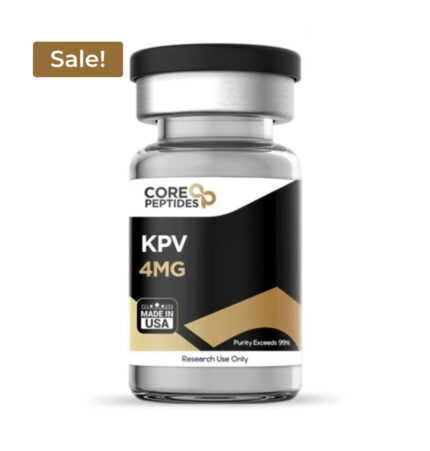
KPV Peptide (4mg)
KPV Peptide 4 mg provides a high-purity, laboratory-verified lyophilized peptide manufactured under strict quality control standards in the USA. Formulated with 4 mg of pure KPV (Lysine-Proline-Valine)—the C-terminal tripeptide fragment of alpha-melanocyte-stimulating hormone (\alpha\text{-MSH})—this compound is widely utilized in gastroenterology, immunology, and dermatology research investigating inflammatory bowel disease (IBD) suppression, antimicrobial signaling, and NF-\kappa\text{B} pathway downregulation.
Key Specifications
Active Compound: KPV (Lysine-Proline-Valine / \alpha\text{-MSH}_{11-13})
Chemical Formula: \text{C}_{16}\text{H}_{30}\text{N}_{4}\text{O}_{4}
Concentration: 4 mg per vial
Purity Standard: Exceeds 99% (Third-Party HPLC Verified)
Formulation: Sterile Lyophilized Powder
Origin: Manufactured in USA
Classification: Research Use Only
Primary Research Applications
Gastrointestinal Anti-Inflammatory Modulation: KPV is extensively studied in intestinal inflammation models for its ability to penetrate mucosal epithelial cells and inhibit nuclear factor kappa B (NF-\kappa\text{B}) translocation, reducing colonic tissue damage.
Antimicrobial & Anti-Fungal Activity: Evaluated in cellular microbiology models for direct antimicrobial properties against pathogen strains, including Candida albicans and Staphylococcus aureus.
Dermatological & Tissue Repair: Investigated in wound healing and inflammatory skin condition models to suppress pro-inflammatory cytokine expression (\text{IL-6}, \text{TNF-}\alpha) without inducing melanogenesis.
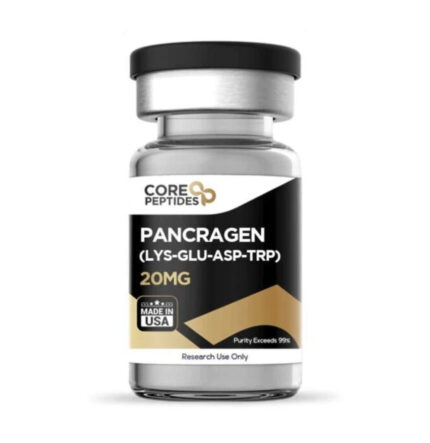
Pancragen Peptide (20mg)
Pancragen peptide 20 mg provides a high-purity, laboratory-verified lyophilized peptide manufactured under strict quality control standards in the USA. Formulated with 20 mg of pure Pancragen—a synthetic tetrapeptide bioregulator composed of L-lysine, L-glutamic acid, L-aspartic acid, and L-tryptophan (Lys-Glu-Asp-Trp)—this compound is widely utilized in endocrinology, metabolic science, and cellular biology research examining pancreatic beta-cell restoration, insulin sensitivity modulation, and glucose homeostasis regulation.
Key Specifications
Active Compound: Pancragen (L-Lysyl-L-Glutamyl-L-Aspartyl-L-Tryptophan / Lys-Glu-Asp-Trp)
Chemical Formula: \text{C}_{26}\text{H}_{36}\text{N}_{6}\text{O}_{9}
Concentration: 20 mg per vial
Purity Standard: Exceeds 99% (Third-Party HPLC Verified)
Formulation: Sterile Lyophilized Powder
Origin: Manufactured in USA
Classification: Research Use Only
Primary Research Applications
Pancreatic Beta-Cell Function & Insulin Sensitivity: Pancragen is extensively studied for its capacity to stimulate insulin gene expression, promote pancreatic islet cell functional integrity, and enhance peripheral glucose clearance in metabolic models.
Exocrine & Endocrine Tissue Remodeling: Evaluated in pancreatic insufficiency and pancreatitis models to assess its tissue-protective properties, acinar cell repair mechanisms, and digestive enzyme regulation.
Epigenetic Regulation of Carbohydrate Metabolism: Investigated in peptide bioregulator research for its interaction with chromatin structural proteins, regulating transcription factors tied to glycemic control and vascular protection against hyperglycemia.
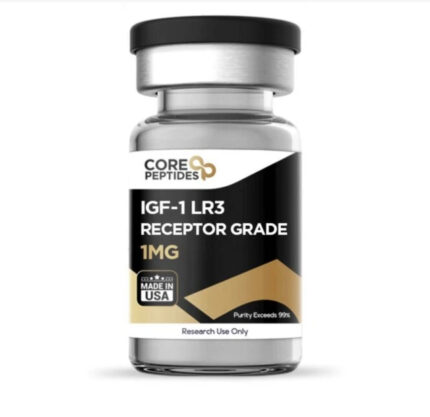
Receptor Grade IGF-1 LR3 (1mg)
IGF-1 LR3 Receptor Grade 1 mg provides a high-purity, laboratory-verified lyophilized recombinant peptide manufactured under strict quality control standards in the USA. Formulated with 1 mg of pure Long \text{R}^3 Insulin-like Growth Factor-1, this modified analog features an arginine substitution at position 3 and a 13-amino-acid N-terminal extension. Specifically designated as receptor grade, this compound exhibits significantly reduced binding affinity for IGF binding proteins (IGFBPs), allowing researchers to study prolonged, uninhibited receptor-ligand interactions and cellular proliferation dynamics.
Key Specifications
Active Compound: IGF-1 LR3 (Long Arginine 3 IGF-1)
Grade: Receptor Grade
Concentration: 1 mg per vial
Purity Standard: Exceeds 99% (Third-Party HPLC Verified)
Formulation: Sterile Lyophilized Powder
Origin: Manufactured in USA
Classification: Research Use Only
Primary Research Applications
IGFBP Resistance & Extended Half-Life: The structural modification drastically lowers binding to IGF-binding proteins, enabling researchers to observe sustained activation of the IGF-1 receptor (IGF-1R) without rapid metabolic inactivation.
Cellular Proliferation & Protein Synthesis: Widely applied in vitro to study MAPK/ERK and PI3K/Akt/mTOR signaling pathways involved in cell growth, myogenesis, and nutrient transport regulation.
Hyperplasia & Tissue Culture Assays: Utilized in research models measuring satellite cell activation, skeletal muscle fiber recruitment, and metabolic shift mechanics.
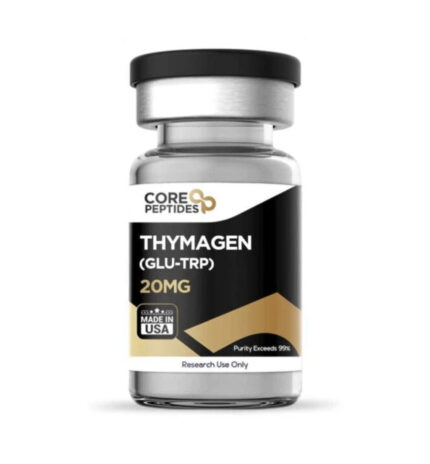
Thymagen Peptide (20mg)
Thymagen 20 mg provides a high-purity, laboratory-verified lyophilized peptide manufactured under strict quality control standards in the USA. Formulated with 20 mg of pure Thymagen—a synthetic dipeptide bioregulator consisting of L-glutamic acid and L-tryptophan (Glu-Trp)—this compound is widely utilized in immunology, molecular biology, and epigenetic research examining T-cell activation, chromatin structure modification, and immune system homeostasis regulation.
Key Specifications
Active Compound: Thymagen (L-Glutamyl-L-Tryptophan / Glu-Trp)
Chemical Formula: \text{C}_{16}\text{H}_{19}\text{N}_{3}\text{O}_{5}
Concentration: 20 mg per vial
Purity Standard: Exceeds 99% (Third-Party HPLC Verified)
Formulation: Sterile Lyophilized Powder
Origin: Manufactured in USA
Classification: Research Use Only
Primary Research Applications
Immune Response Modulation: Thymagen is extensively evaluated for its ability to regulate cellular immune activity, restore suppressed T-lymphocyte proliferation, and balance helper-to-suppressor T-cell ratios.
Epigenetic & Gene Expression Regulation: Studied in cell biology models for its capacity to interact with histone proteins and DNA sequences, influencing gene expression associated with protein synthesis and immune cell differentiation.
Tissue Regeneration & Stress Resistance: Investigated for its protective effects on hemopoiesis, resistance to oxidative injury, and systemic recovery mechanisms following toxic or infectious immune suppression.
VIP Peptide (6mg)
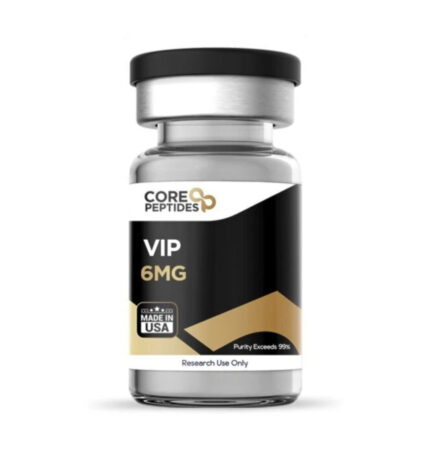
VIP Peptide 6 mg provides a high-purity, laboratory-verified lyophilized peptide manufactured under strict quality control standards in the USA. Formulated with 6 mg of pure Vasoactive Intestinal Peptide (VIP)—a naturally occurring 28-amino-acid neuropeptide belonging to the secretin/glucagon superfamily—this compound is widely utilized in immunology, neurobiology, gastroenterology, and cardiovascular research examining immunomodulatory cascades, smooth muscle relaxation, and suprachiasmatic nucleus circadian clock synchronization.
Key Specifications
Active Compound: Vasoactive Intestinal Peptide (VIP)
Chemical Formula: \text{C}_{147}\text{H}_{238}\text{N}_{44}\text{O}_{42}\text{S}
Concentration: 6 mg per vial
Purity Standard: Exceeds 99% (Third-Party HPLC Verified)
Formulation: Sterile Lyophilized Powder
Origin: Manufactured in USA
Classification: Research Use Only
Primary Research Applications
Immunomodulation & Anti-Inflammatory Pathways: VIP acts via VPAC1 and VPAC2 receptors to inhibit pro-inflammatory cytokines (TNF-\alpha, IL-6, IL-12) while upregulating anti-inflammatory pathways (IL-10), making it a benchmark subject in autoimmune and chronic inflammatory signaling research.
Vascular & Pulmonary Smooth Muscle Regulation: Evaluated in cardiovascular and respiratory models for its potent vasodilatory properties, pulmonary arterial pressure regulation, and airway bronchodilator mechanisms.
Circadian Rhythm & Neuroendocrine Signaling: Extensively studied in suprachiasmatic nucleus (SCN) neuronal models to analyze central biological clock entrainment, neuropeptide release dynamics, and intestinal mucosal signaling.
Reviews
There are no reviews yet.