
























Matrixyl (200mg)
$170.00
Matrixyl, also known as as palmitoyl pentapeptide-4 or palmitoyl pentapeptide-3, is a synthetic peptide currently under scientific investigation for its potential to stimulate collagen production in the skin. It is classified as a matrikine – a messenger peptide that may regulate cell activities by interacting with their specific receptors. Collagen is a protein that is considered to support flexibility and structural integrity in the extracellular matrix of the skin. The conjugation with the palmitoyl introduces the potential for more consistent delivery across the skin and better stability to skin proteases.
Size: 200mg
Contents: Matrixyl
Form: Lyophilized powder
Purity: >99%
SKU: P-Matrixyl
FREE Shipping on $200+ orders
Matrixyl
Matrixyl, also known as as palmitoyl pentapeptide-4 or palmitoyl pentapeptide-3, is a synthetic peptide currently under scientific investigation for its potential to stimulate collagen production in the skin. It is classified as a matrikine – a messenger peptide that may regulate cell activities by interacting with their specific receptors. Collagen is a protein that is considered to support flexibility and structural integrity in the extracellular matrix of the skin. The conjugation with the palmitoyl introduces the potential for more consistent delivery across the skin and better stability to skin proteases.(1)
Chemical Makeup
Molecular formula: C39H75N7O10
Molecular weight: 802.05 g/mol
Other known titles: Palmitoyl pentapeptide-4, (palmitoyl pentapeptide-3 prior to 2006)
Research and Clinical Studies
Matrixyl Peptide and Collagen Synthesis
Studies suggest that Matrixyl may act as a signal peptide fragment of the C-terminal propeptide of type I collagen.(2) The scientists indicate that it may act by signaling fibroblasts and “stimulates feedback regulation of new collagen synthesis and ECM proteins.” Fibroblasts are a type of cell that is found in connective tissue. They play a crucial role in forming and maintaining the extracellular matrix (ECM), a complex network of proteins and carbohydrates that provides structural support to tissues and organs. The main extracellular matrix proteins are collagens, elastins, fibronectins, and laminins. Fibroblasts produce and secrete collagen, the ECM’s main structural protein. Collagen provides tensile strength to tissues and organs and is essential for maintaining their shape and integrity. During wound healing, fibroblasts are responsible for depositing new collagen fibers to replace damaged tissue. Researchers suggested that Matrixyl may potentially stimulate collagen production in a concentration-dependent manner close to the critical aggregation concentration, indicating that self-assembly and collagen production are interrelated.(3) Self-assembly of peptides includes hydrogen bonds, electrostatic interactions, hydrophobic interactions, aromatic interactions (π–π stacking), and van der Waals forces.
Matrixyl Peptide and Wrinkles
Several studies suggest some potential for Matrixyl to induce action on fibroblasts and collagen synthesis. One research study examined its potential in research models of bi-lateral exposure to Matrixyl peptide and placebo, respectively.(5) The study reported that the peptide appeared to have reduced overall wrinkle depth compared to the placebo control.
An additional study aimed to investigate the cellular activity of Matrixyl.(6) A compound infused with Matrixyl was introduced twice daily to the periorbital area of the research model for a duration of 8 weeks. The results indicated improvements via the exposure to Matrixyl, which appeared to exhibit better results when compared to other peptides and placebo based on measured data.
Another study aimed to isolate the potential of Matrixyl to improve skin surface texture and wrinkle depth in the periorbital region.(7) Two double-blind, randomized, controlled studies were conducted in research models of moderate to distinct periorbital wrinkles. After 4 weeks, the peptide was reported by researchers to have appeared to reduced the texture of periorbital skin and reduced the apparent depth of larger wrinkles.
Matrixyl Peptide and Scarring
One study investigated the potential of Matrixyl on fibroblast contractility and its potential role in scar formation.(8) Matrixyl was reported to reduce the expression of α-SMA (alpha-smooth muscle actin) and inhibit the trans-differentiation of fibroblasts to myofibroblasts. Scientists indicate alpha smooth muscle actin (α-SMA) is a protein commonly found in smooth muscle cells, including those in blood vessels and hollow organs such as the intestines and bladder. It is also considered to be expressed by a specialized type of cell called a myofibroblast, which plays a key role in wound healing and tissue repair. In the context of fibrotic scarring, the expression of α-SMA by myofibroblasts is associated with the deposition of excess collagen and the development of scar tissue.
Matrixyl Peptide and Tissue Repair
One animal study investigated the potential of Matrixyl in promoting wound healing. Animals were divided into seven groups and monitored for 21 days.(9) Results suggested that Matrixyl may positively impact wound healing, with larger potential seen in the high-concentration Matrixyl groups compared to a positive control group. The scientists reported that “the macroscopic results showed that wound healing was improved from 63.5 up to 81.81% in treatment groups compared to that in the negative control group.”
Another article described the development of a novel conjugate of Matrixyl with imidazolium-based ionic liquid.(10) Imidazolium-based ionic liquids have antimicrobial and skin penetration properties. These conjugates also have collagenesis-inducing activity comparable to the proposed efficacy of Matrixyl.
References:
- Choi, Y. L., Park, E. J., Kim, E., Na, D. H., & Shin, Y. H. (2014). Dermal Stability and In Vitro Skin Permeation of Collagen Pentapeptides (KTTKS and palmitoyl-KTTKS). Biomolecules & therapeutics, 22(4), 321–327. https://doi.org/10.4062/biomolther.2014.053
- Errante, F., Ledwoń, P., Latajka, R., Rovero, P., & Papini, A. M. (2020). Cosmeceutical Peptides in the Framework of Sustainable Wellness Economy. Frontiers in chemistry, 8, 572923. https://doi.org/10.3389/fchem.2020.572923
- Jones, R. R., Castelletto, V., Connon, C. J., & Hamley, I. W. (2013). Collagen stimulating effect of peptide amphiphile C16-KTTKS on human fibroblasts. Molecular pharmaceutics, 10(3), 1063–1069. https://doi.org/10.1021/mp300549d


Related products
ACE-031 Peptide (1mg)
ACE-031 1 mg is a research-grade lyophilized protein peptide engineered for high-purity laboratory applications. Each vial contains 1 mg of HPLC-verified ACE-031, third-party tested to guarantee over 99% purity and manufactured in the USA under strict standards. Formulated specifically for research investigating myostatin signal neutralization, ActRIIB decoy receptor binding, and muscle growth regulation pathways, this product is strictly intended for research use only.
AICAR Peptide (50mg)
AICAR 50 mg provides a high-purity, laboratory-verified lyophilized compound manufactured under strict quality control standards in the USA. Formulated with 50 mg of pure AICAR (5-Aminoimidazole-4-carboxamide ribonucleotide) per vial, this synthetic adenosine analog is widely utilized in cellular, metabolic, and exercise physiology research investigating AMP-activated protein kinase (AMPK) activation, cellular energy homeostasis, and mitochondrial biogenesis pathways.
Key Specifications
Active Compound: AICAR (Acadesine / AICA Riboside)
Chemical Formula: \text{C}_{9}\text{H}_{15}\text{N}_{4}\text{O}_{8}\text{P}
Concentration: 50 mg per vial
Purity Standard: Exceeds 99% (Third-Party HPLC Verified)
Formulation: Sterile Lyophilized Powder
Origin: Manufactured in USA
Classification: Research Use Only
Primary Research Applications
AMP-Activated Protein Kinase (AMPK) Activation: AICAR is intracellularly phosphorylated into ZMP, an AMP mimic that directly activates AMPK without altering cellular ATP/ADP ratios, facilitating targeted metabolic research.
Mitochondrial Biogenesis & Endurance Pathways: Applied in cell cultures to analyze upregulated PGC-1$\alpha$ signaling, glucose uptake enhancement, and lipid oxidation mechanisms.
Ischemic & Cellular Energy Homeostasis Studies: Extensively investigated in cardiac and skeletal muscle models measuring metabolic adaptation, cellular stress response, and insulin sensitivity.
ARA-290 Peptide (16mg)
ARA-290 16 mg provides a high-purity, laboratory-verified lyophilized peptide manufactured under strict quality control standards in the USA. Formulated with 16 mg of pure ARA-290 (Cibinetide; Pyroglu-Glu-Gln-Glu-Arg-Glu-Arg-Ala-Glu-Ala-Lys-Glu)—a 11-amino-acid synthetic peptide derived from the erythropoietin (EPO) structure—this compound selectively targets the Innate Repair Receptor (IRR) without stimulating erythropoiesis. It is widely utilized in neurology, immunology, and tissue regeneration research investigating neuropathic pain attenuation, small nerve fiber regeneration, and inflammatory cytokine suppression.
Key Specifications
Active Compound: ARA-290 (Cibinetide / Pyroglutamate Helix B Surface Peptide)
Chemical Formula: \text{C}_{51}\text{H}_{84}\text{N}_{16}\text{O}_{21}
Concentration: 16 mg per vial
Purity Standard: Exceeds 99% (Third-Party HPLC Verified)
Formulation: Sterile Lyophilized Powder
Origin: Manufactured in USA
Classification: Research Use Only
Primary Research Applications
Selective Innate Repair Receptor (IRR) Activation: ARA-290 selectively binds the erythropoietin receptor / \beta-common receptor (\text{EPOR/}\beta\text{cR}) heterodimer to initiate anti-inflammatory and tissue-protective signaling without increasing red blood cell count or hematocrit levels.
Small Fiber Neuropathy & Peripheral Nerve Repair: Extensively studied in neuropathic disease models for its ability to promote small nerve fiber density restoration, repair damaged peripheral axons, and relieve neuropathic pain signaling.
Anti-Inflammatory & Ischemic Protection: Investigated for its inhibitory effects on pro-inflammatory cytokine cascades (\text{TNF-}\alpha, \text{IL-6}) and its protective role against ischemia-reperfusion injury in cardiovascular and metabolic tissue models.
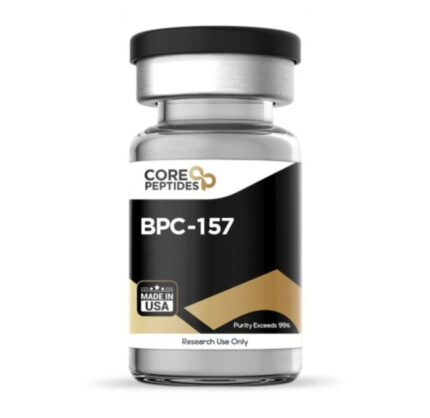
BPC-157 (10 mg)
BPC-157 (10mg) is a high-purity (≥98%) research-grade pentadecapeptide extensively studied for its powerful tissue regeneration, tendon healing, and gut mucosa protective properties. Supplied as a stable lyophilized powder, every batch undergoes strict HPLC and Mass Spectrometry testing to guarantee maximum purity and reliable research results.
For research and laboratory use only. Not for human consumption.
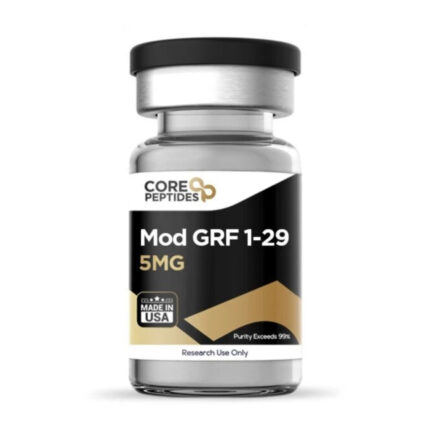
CJC-1295 NO DAC (Mod GRF 1-29) (5mg)
CJC-1295 NO DAC (Mod GRF 1-29) 5mg is a premium, high-purity (\ge99% HPLC-verified) synthetic peptide derived from natural Growth Hormone-Releasing Hormone (GHRH). Engineered with four target amino acid substitutions (positions 2, 8, 15, and 27), it offers superior resistance against DPP-IV enzymatic degradation while maintaining a natural, short-acting pulsatile signaling profile. Supplied as a sterile, lyophilized powder strictly for scientific laboratory and in vitro research applications.
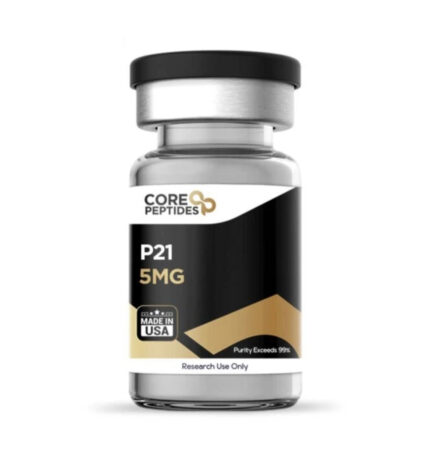
P21 Peptide (5mg)
P21 5 mg provides a high-purity, laboratory-verified lyophilized peptide manufactured under strict quality control standards in the USA. Formulated with 5 mg of pure P21—a synthetic peptide mimetic derived from ciliary neurotrophic factor (CNTF)—this compound is widely utilized in neurobiology, cognitive science, and neurodegenerative disease research examining neurogenesis, synaptic plasticity, BDNF signaling, and cognitive enhancement mechanisms.
Key Specifications
Active Compound: P21 Peptide (CNTF-derived synthetic peptide)
Chemical Formula: \text{C}_{30}\text{H}_{55}\text{N}_{9}\text{O}_{9}
Concentration: 5 mg per vial
Purity Standard: Exceeds 99% (Third-Party HPLC Verified)
Formulation: Sterile Lyophilized Powder
Origin: Manufactured in USA
Classification: Research Use Only
Primary Research Applications
Neurogenesis & Synaptogenesis: P21 is evaluated for its ability to promote neural progenitor cell proliferation and maturation in the dentate gyrus of the hippocampus, supporting research into structural brain plasticity.
Neurotrophic Factor Expression: Extensively studied for enhancing endogenous brain-derived neurotrophic factor (BDNF) and nerve growth factor (NGF) signaling pathways without inducing CNTF-receptor autoantibodies.
Cognitive Enhancement & Neuroprotection: Investigated in animal models of cognitive impairment, Alzheimer's disease, and traumatic brain injury to analyze memory retention recovery and synaptic density preservation.
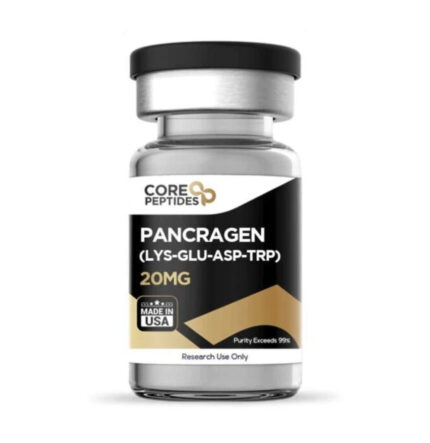
Pancragen Peptide (20mg)
Pancragen peptide 20 mg provides a high-purity, laboratory-verified lyophilized peptide manufactured under strict quality control standards in the USA. Formulated with 20 mg of pure Pancragen—a synthetic tetrapeptide bioregulator composed of L-lysine, L-glutamic acid, L-aspartic acid, and L-tryptophan (Lys-Glu-Asp-Trp)—this compound is widely utilized in endocrinology, metabolic science, and cellular biology research examining pancreatic beta-cell restoration, insulin sensitivity modulation, and glucose homeostasis regulation.
Key Specifications
Active Compound: Pancragen (L-Lysyl-L-Glutamyl-L-Aspartyl-L-Tryptophan / Lys-Glu-Asp-Trp)
Chemical Formula: \text{C}_{26}\text{H}_{36}\text{N}_{6}\text{O}_{9}
Concentration: 20 mg per vial
Purity Standard: Exceeds 99% (Third-Party HPLC Verified)
Formulation: Sterile Lyophilized Powder
Origin: Manufactured in USA
Classification: Research Use Only
Primary Research Applications
Pancreatic Beta-Cell Function & Insulin Sensitivity: Pancragen is extensively studied for its capacity to stimulate insulin gene expression, promote pancreatic islet cell functional integrity, and enhance peripheral glucose clearance in metabolic models.
Exocrine & Endocrine Tissue Remodeling: Evaluated in pancreatic insufficiency and pancreatitis models to assess its tissue-protective properties, acinar cell repair mechanisms, and digestive enzyme regulation.
Epigenetic Regulation of Carbohydrate Metabolism: Investigated in peptide bioregulator research for its interaction with chromatin structural proteins, regulating transcription factors tied to glycemic control and vascular protection against hyperglycemia.
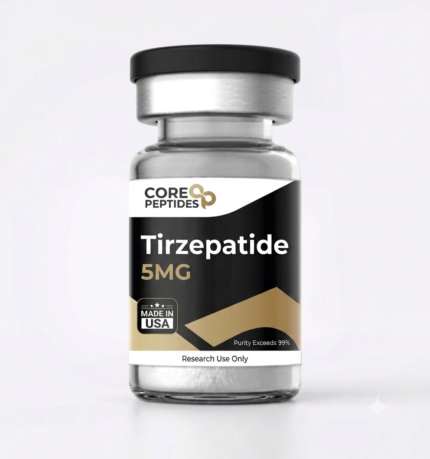
Tirzepatide (5mg)
Tirzepatide (5mg) is a dual GIP and GLP-1 receptor agonist designed to study advanced weight loss, lipid metabolism, and glycemic control. Engineered for high potency, this peptide targets dual incretin pathways to optimize metabolic research outcomes. Supplied as a high-purity lyophilized powder for laboratory use.
Reviews
There are no reviews yet.